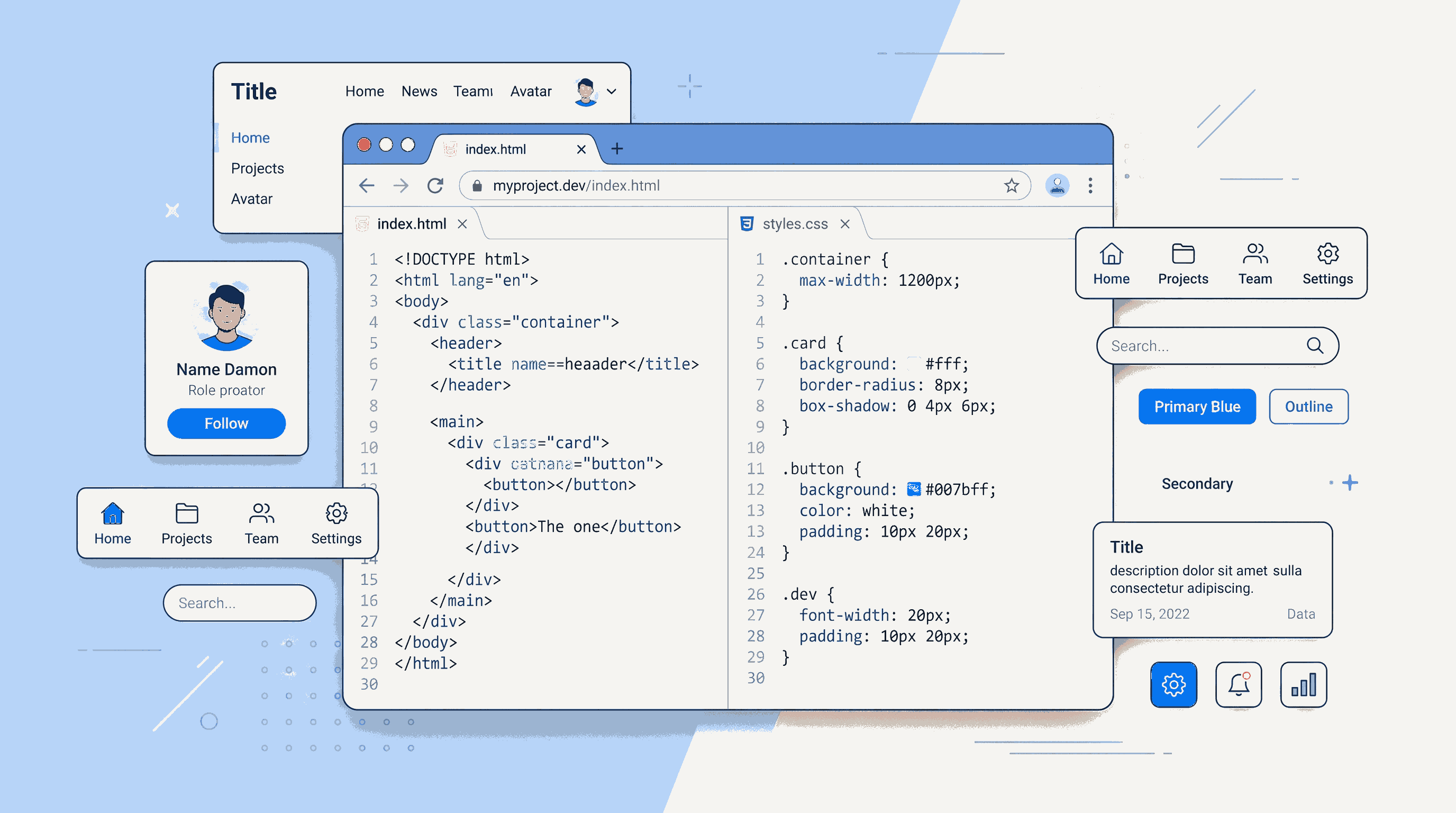
- frontend developer interview questions checklist you can use in your next interview
- A simple framework to keep your answer structured and scorable
- A practice plan you can repeat until it feels natural out loud According to LinkedIn's Talent Blog, structured preparation improves interview performance by making your answers easier to evaluate.
Definition is a one-sentence explanation of frontend developer interview questions that a recruiter can understand instantly.
TL;DR: frontend developer interview questions becomes easier when you use a clear structure, measurable proof, and a short practice loop.
Key Takeaways:
- Frontend developer interview questions test judgment (tradeoffs), not trivia.
- Use the SIGNAL rubric to structure answers: Scope, Inputs, Goals, Architecture, Latency, Nuance.
- Prepare a few “proof” stories about performance, accessibility, and debugging.
- Practice explaining decisions out loud, not just writing code.
What is frontend developer interview questions? They’re a set of technical and behavioral prompts that evaluate how you build user-facing systems: correctness, UX judgment, performance, accessibility, and communication.
If you want to do well on frontend developer interview questions, stop optimizing for memorized facts and start optimizing for explainable decisions. Most frontend interviews reward candidates who can articulate tradeoffs: why this state model, why this rendering strategy, why this accessibility choice, why this caching approach.
According to the U.S. Bureau of Labor Statistics, employment of web developers and digital designers is projected to grow 7% from 2024 to 2034 (BLS). That growth means more roles, but also more competition—and interviews increasingly emphasize practical engineering judgment over “gotcha” trivia.
Frontend developer interview questions: what interviewers really evaluate
Frontend interviews are scoring your ability to ship reliable UI under constraints. You’re being judged on how you think, not just what you know.
Common evaluation dimensions behind frontend developer interview questions:
- Product thinking: can you translate “make it feel fast” into concrete changes?
- Performance instincts: can you reason about render cost, network cost, and caching?
- Accessibility: can you ship UI that works for real users (keyboard, screen readers)?
- Debugging: can you isolate a bug with minimal thrash?
- Communication: can you narrate tradeoffs and ask good questions?
This mirrors how coding interviews work in general: the interviewer needs to grade what they can observe. If you want a baseline structure, use these coding interview tips and add UI-specific reasoning.
Frontend developer interview questions: the SIGNAL rubric for answers
SIGNAL is a repeatable way to answer UI questions without rambling.
Use SIGNAL for any open-ended frontend developer interview questions (system design, React architecture, debugging):
- Scope: what is the feature and what is out of scope?
- Inputs: what data do we have, how does it change, and what are edge cases?
- Goals: what do we optimize for (latency, correctness, UX, accessibility)?
- Architecture: what state model, component boundaries, and data flow?
- Latency: where are the expensive parts (render, network, JS execution)?
- Nuance: what tradeoffs and failure modes should we call out?
💡 Pro Tip: In frontend developer interview questions, stating constraints early (“we need keyboard support” / “we can’t block on data”) makes your answer sound senior immediately.
What should you study for frontend developer interview questions?
Study the problems you’ll actually face: state, rendering, accessibility, and performance. Don’t spend all your time on obscure trivia unless the company is known for it.
Use this practical checklist:
- JavaScript fundamentals: closures, async/await, event loop basics, promises.
- DOM + browser: event propagation, layout/paint/compositing, network waterfall.
- React (or framework): controlled components, state lifting, effects, memoization.
- Performance: why things re-render, how to measure, common fixes.
- Accessibility: semantic HTML, keyboard navigation, ARIA basics.
- Testing: unit vs integration vs E2E, what to test and why.
If you want a structured prep loop, pair this with the mock interview practice guide so you’re not only learning—you’re performing under interview pressure.
Frontend developer interview questions by category (and what “good” looks like)
Good answers sound like decisions with evidence, not definitions. Below are common frontend developer interview questions and the signals interviewers look for.
Frontend developer interview questions about JavaScript
A strong answer explains behavior with a mental model.
Typical prompts:
- “Explain the event loop and microtasks vs macrotasks.”
- “What’s the difference between == and ===?”
- “Explain closures with a practical example.”
What interviewers want to hear:
- You can reason about async ordering without guessing.
- You can explain a closure as “captured lexical environment,” then show a real use case (handlers, memoization, factories).
- You know where implicit coercion bites and when to avoid it.
Frontend developer interview questions about React
A strong answer connects state flow to user experience.
Typical prompts:
- “When would you use useMemo/useCallback?”
- “How do you prevent unnecessary re-renders?”
- “How do you structure state for a complex form?”
What good looks like:
- You start with state ownership: local vs shared vs server state.
- You talk about data flow and component boundaries.
- You mention measuring first (React DevTools profiler) before “optimizing.”
Frontend developer interview questions about performance
A strong answer names bottlenecks and proposes a measurement plan.
Typical prompts:
- “Why is this page slow?”
- “How do you optimize large lists?”
- “How do you reduce bundle size?”
What good looks like:
- You separate network vs CPU vs render cost.
- You propose instrumentation: Lighthouse, Performance tab, Web Vitals.
- You mention tradeoffs: virtualization vs UX, SSR vs hydration cost.
Frontend developer interview questions about accessibility
A strong answer treats accessibility as product quality, not compliance.
Typical prompts:
- “How do you make a custom dropdown accessible?”
- “What does aria-label do?”
- “How do you support keyboard navigation?”
What good looks like:
- You default to semantic HTML first.
- You mention focus management, tab order, and screen reader behavior.
- You talk about testing: keyboard-only + a screen reader pass.
Frontend developer interview questions about collaboration
A strong answer shows you can ship with others.
Typical prompts:
- “Tell me about a disagreement with a designer.”
- “How do you handle ambiguous requirements?”
Your best move is to give a clean story with structure. Use the behavioral interview prep guide and a STAR-style narrative when appropriate.
Frontend developer interview questions: a practical debug framework
When you’re asked to debug, show process, not panic. Interviewers don’t expect perfect recall; they expect disciplined isolation.
Use the 5-step LOOP:
- Locate: reproduce the bug with the smallest scenario.
- Observe: add minimal logging and inspect state/props/network.
- Outline: list 2–3 hypotheses and what evidence would confirm each.
- Prove: run one targeted experiment (toggle flag, mock response, remove effect).
- Patch: fix, then add a guardrail (test, lint rule, monitoring).
⚠️ Warning: The fastest way to fail frontend developer interview questions is to randomly change code without explaining what you’re testing. Always name your hypothesis.
Compare block: weak vs strong answer for frontend developer interview questions
❌ Weak Answer: "I would optimize performance by memoizing components and using useMemo everywhere. For accessibility, I’d add ARIA labels."
✅ Strong Answer: "I’d profile first to see if the bottleneck is render, network, or JS execution. Then I’d apply targeted fixes like list virtualization, splitting bundles, or caching. For accessibility, I’d start with semantic HTML, ensure keyboard navigation and focus management, and only add ARIA when needed."
Frontend developer interview questions: a 5-day practice plan
Practice is the multiplier because it forces clarity under time pressure.
Day 1: Core JS mental models
Pick 6 prompts (event loop, closures, async/await). For each, write a 3-sentence explanation and one practical example.
Day 2: React state and boundaries
Take one feature (search + filters + pagination). Explain how you’d structure state and why, then build a minimal component tree.
Day 3: Performance and measurement
Pick one slow UI scenario. Explain what you’d measure (Web Vitals, waterfall, profiler) and propose 3 fixes with tradeoffs.
Day 4: Accessibility pass
Take a dropdown/modal component and write a checklist: semantics, focus trap, escape key, labels, tab order.
Day 5: Full mock
Do a mock that mixes one technical question and one behavioral question. Practicing with a human interviewer on LeetCodeMate helps because you get feedback on clarity, pacing, and “senior-ness,” not just correctness.
If your role includes architecture discussions (data flow, caching, consistency), pair your prep with system design interview tips. Frontend developer interview questions often include “mini system design” scenarios like feeds, search, and real-time updates. Treat each answer like a small design review: constraints, tradeoffs, and a test plan.
Frequently Asked Questions
How long should answers be for frontend developer interview questions?
Aim for 60–120 seconds per question. Start with the decision, then support it with one concrete example or tradeoff.
What if I don’t know an exact browser API detail?
State your assumption, propose how you’d verify it (MDN, a quick repro), and keep the broader reasoning solid. Interviewers respect disciplined uncertainty.
How do interviewers evaluate frontend developer interview questions fairly?
They look for structured thinking: clarifying questions, tradeoffs, and evidence. Clear communication often separates candidates with similar coding ability.
Key Takeaways
- Use SIGNAL to structure open-ended frontend developer interview questions.
- Optimize for explainable decisions: constraints, tradeoffs, measurement.
- Treat accessibility and performance as core product quality signals.
- Practice out loud so your reasoning is observable and scorable.
Ready to practice your frontend developer interview questions answers with a real interviewer? Book a free mock interview on LeetCodeMate → and get personalized feedback from engineers who've interviewed at FAANG companies.
Weak vs Strong: frontend developer interview questions
Weak Answer
I would approach it generally and hope it lands. I don’t have a clear structure and I can’t point to a concrete result.
Strong Answer
I use a clear structure, state what I owned, and prove impact with one metric. I keep it concise and role-aligned.
The strong answer is scorable: structure, ownership, evidence, and clear fit.
If you want related practice, read a complementary interview prep guide and another framework you can reuse.
The fastest way to improve is hearing how your frontend developer interview questions answer lands with an experienced interviewer—Start Practicing Free and get scored feedback.
Ready to practice?
Book a mock interview session and get targeted feedback.